-
Continue reading →: Before the Doctrine: Imam ʿAlī’s Political Vocabulary and the Question of Naṣṣ
In Nahj al-Balāghah, Letter 6, Imam ʿAlī rests his caliphate on the shūrā of the Muhājirūn and the Anṣār and calls its outcome pleasing to Allah: a clause the dialectical defence (ilzām al-khaṣm) may borrow but cannot easily bless. Read alongside the Ṣaḥīḥayn and the Ṣiffīn corpus, the essay asks…
-
 Continue reading →: That by Which a Thing Is Itself
What makes a thing this thing? Moving from Avicenna and Mullā Ṣadrā to quantum mechanics and the singlet state, this essay examines how modern physics unsettles ancient accounts of individuation, identity, and what it means for something to be itself.
-
 Continue reading →: From Blood to Supplication: Prayer, the Open Decree, and the Agency of the Powerless
(7/7) Tenth of Muharram, 1448 AH : At the series’ close, Karbalāʾ becomes a problem of petitionary agency: against Stump, Aquinas, and speech-act deflations of prayer, this essay reads duʿāʾ through badāʾ, maḥw wa ithbāt, and intizār al-faraj as action upon an open decree.
-
 Continue reading →: Every Day Is ʿAshura: Tense, Re-Presentation, and the Past That Will Not Pass
(6/7) Ninth of Muharram, 1448 AH : Where the past refuses to become merely past, ʿAshura becomes a problem in tense, presence, and ritual time: between eternalism, dahr, anamnesis, Augustine, and Bergson, this essay asks how Karbalāʾ remains present without being repeated.
-
 Continue reading →: The Founding Refusal: Karbalāʾ and the Aporia of Shīʿī Quietism
(5/7) Eighth of Muharram, 1448 AH : Where Karbalāʾ becomes both founding refusal and quietist inheritance, the question is whether an exemplary act must become a universal maxim. Between Kant, Arendt, taqiyya, intizār, and dīn without dawla, this essay asks whether al-Ḥusayn’s no is a repeatable tactic, a reserved exception,…
-
 Continue reading →: Certainty Without Authentication: The Isnād of What We Mourn
(4/7) Seventh of Muharram, 1448 AH : Where isnād weakens but certainty remains, Karbalāʾ becomes a test case in epistemic ground: between tawātur maʿnawī, hinge-certainty, and testimonial warrant, this essay asks whether mourning knows before authentication proves.
-
 Continue reading →: Presence and the Witness: ʿIlm Ḥuḍūrī and the Captives of Karbalāʾ
(3/7) Sixth of Muharram, 1448 AH : An essay on ʿilm ḥuḍūrī, witness, testimony, and the captives of Karbalāʾ, reading Zaynab’s presence after the massacre through Islamic philosophy, analytic philosophy, phenomenology, and trauma theory.
-
 Continue reading →: The Suffering of the Elect: Karbalāʾ and the Ruin of Theodicy
(2/7) Fifth of Muharram, 1448 AH : A case in which theodicy reaches its moral limit: the infant at Karbalāʾ, whose suffering cannot be absorbed into freedom, formation, compensation, or providential balance without falsifying the wrong itself. The essay asks whether some evils must remain theologically unredeemed, not because faith…
-
 Continue reading →: The Willing of the Necessary: al-Husayn and the Freedom of the Infallible Will
(1/7) Fourth of Muharram, 1448 AH : A case I keep coming back to: al-Ḥusayn foreknew his death and, being infallible, could not have done otherwise, and yet he chose at Karbalāʾ. Read through Frankfurt’s volitional necessity, the act that could not have been otherwise turns out to be the…
-
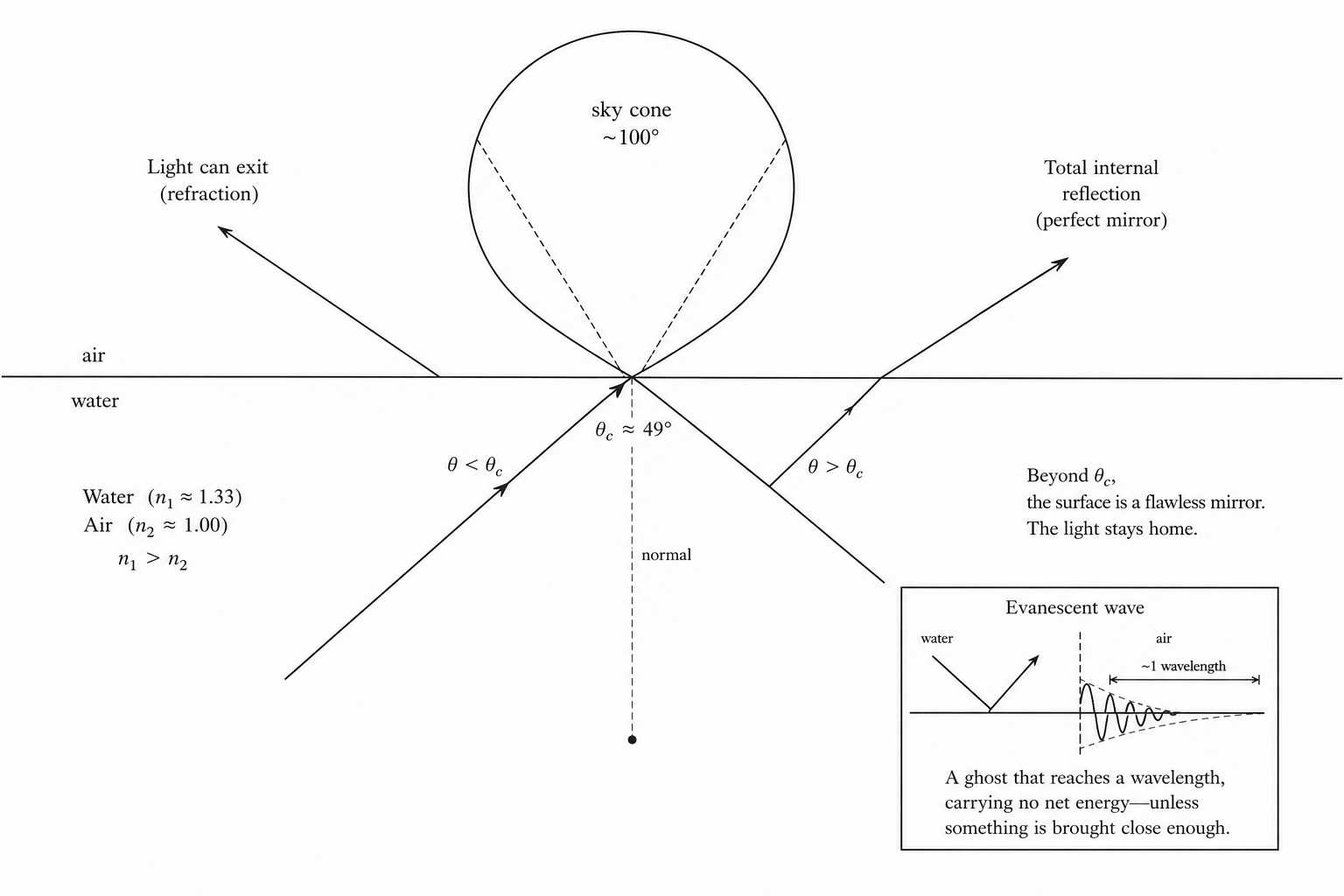 Continue reading →: The Critical Angle: Polemic and the Optics of the Sealed Community
Why polemic never reaches its ostensible target: an essay reading the genre through total internal reflection, Snell’s window, and the logic of jadal and burhān.
Greetings,
Paimana is a space for critical thought and discourse in philosophy, physics, medicine, religion, literature, and perfumery.
Let’s connect
Join the newsletter!
Stay updated with our latest essays